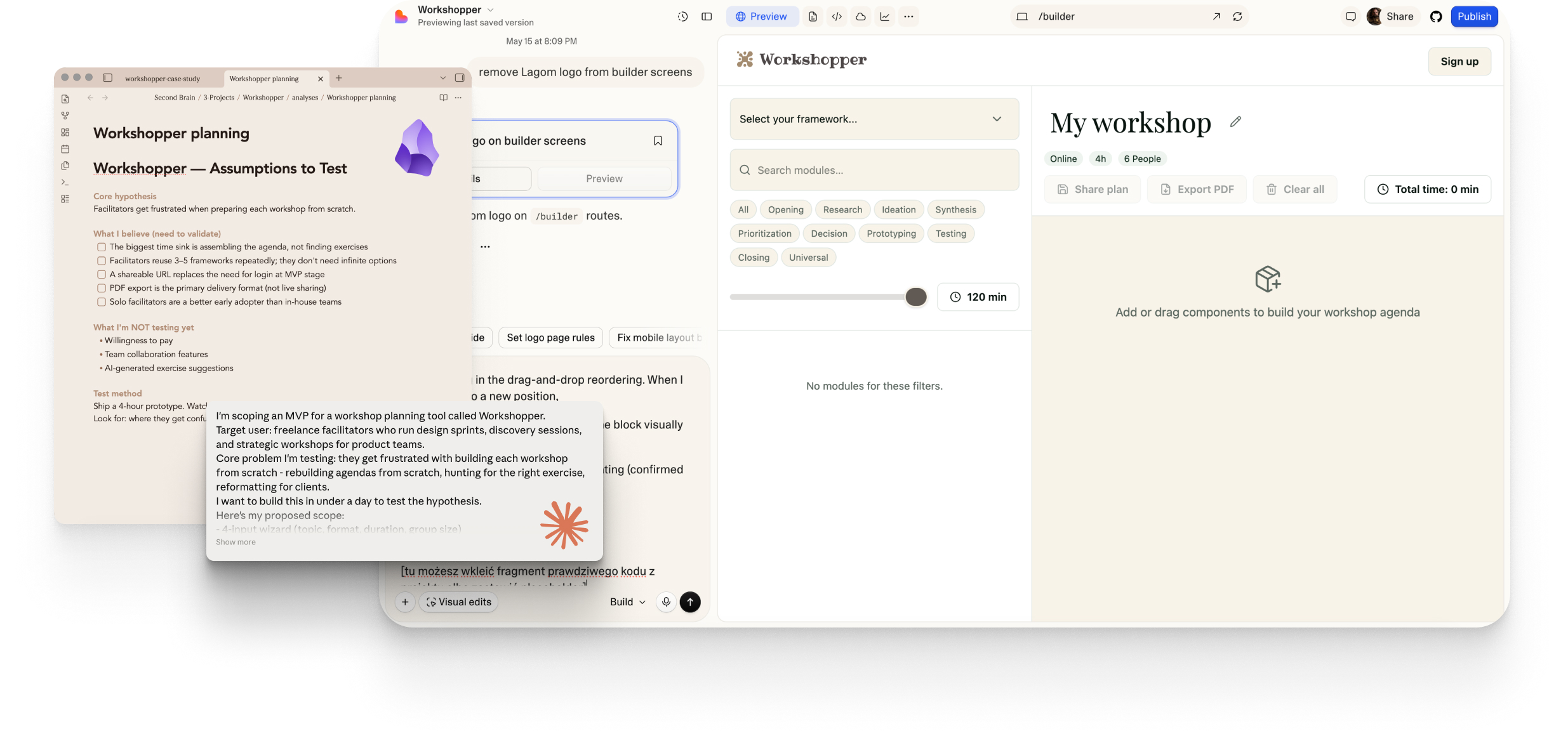
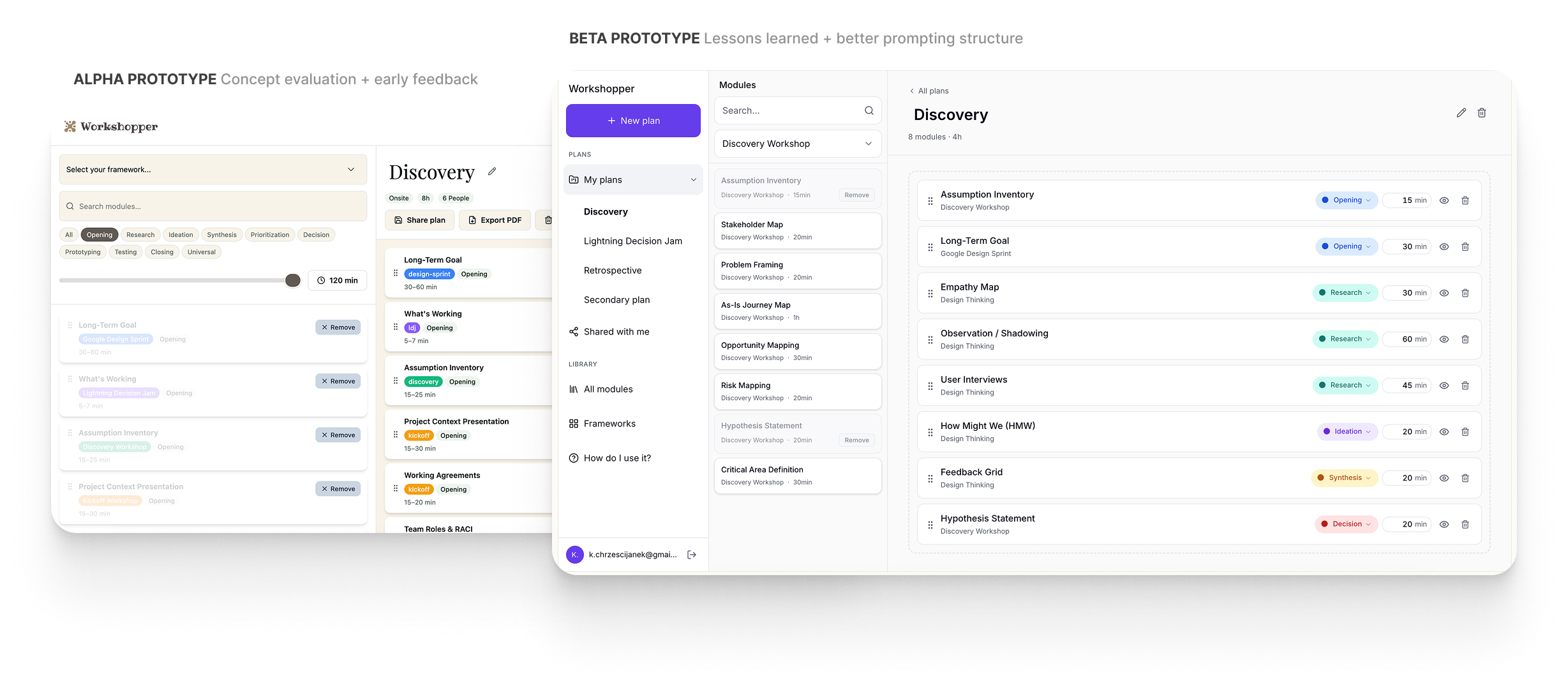
Workshopper is a workshop planning tool built for facilitators – people who run discovery sessions, design sprints, and strategic workshops for product teams. It lets you pick a framework or compose your own agenda from a library of 97 exercises, drag-and-drop blocks into a timed plan, and export a polished PDF for your client.
I designed it, scoped it, and built it, using AI tools throughout. I am also the primary target user.
The Problem
I run workshops regularly. And like most facilitators I know, I was spending way to much time around the workshops rather than in them: rebuilding agendas from scratch, repurposing old slide decks, hunting for the right exercise for a specific group size and time slot. The actual facilitation was the easy part. The preparation was the tax.
The tools available: FigJam, Miro, even SessionLab, were never designed for this. There was no single place to plan, assemble, and share a workshop agenda. So I decided to build one.
From idea to MVP
Before doing anything else, I defined the unknowns:
Where do facilitators actually lose time – before, during, or after a workshop?
Is this painful enough to pay for?
What are they already using, and why does it fall short?
I’m a practitioner in this space, which means I could move faster through discovery than a typical product team would. But I also knew that building for yourself is a trap. So I documented my assumptions explicitly and designed the MVP to test them rather than confirm them.
The MVP scope I landed on:
The wizard takes four inputs: topic, format, duration, group size. Then asks one more question: do you want a head start or full control? Pick a framework like Design Sprint or LDJ and the agenda fills itself in. Pick “manual” and you’re in the exercise library, assembling blocks however you like. Timers update live as you drag things around. When it’s ready, export as PDF or copy a shareable URL. No login, no friction.
I built this in 4 hours from scratch – no design work, just enough to test the idea. The goal wasn’t a polished product; it was a working prototype I could put in front of real facilitators, verify the core hypothesis, and catch the first usability issues before investing more.
Fake Door test
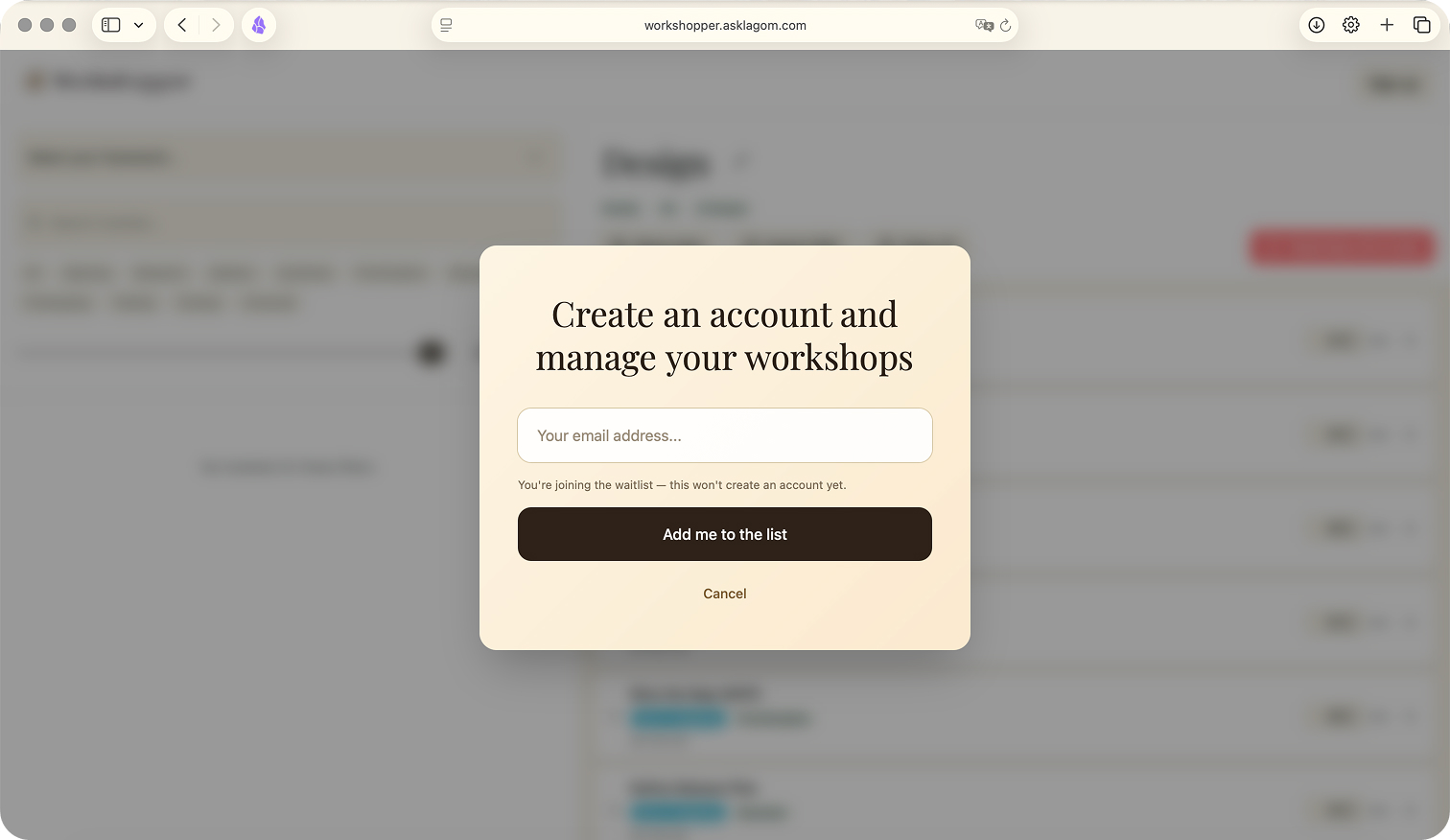
I included a deliberate fake door test in the MVP: after saving a plan or exporting a PDF, a modal appears once per session offering to save the plan permanently in an account. It’s a non-blocking email capture, with the source tracked (save vs. export) in Supabase.
The goal: measure intent without committing to building account management before validating that users actually want to come back.
Built with AI, Not Around It
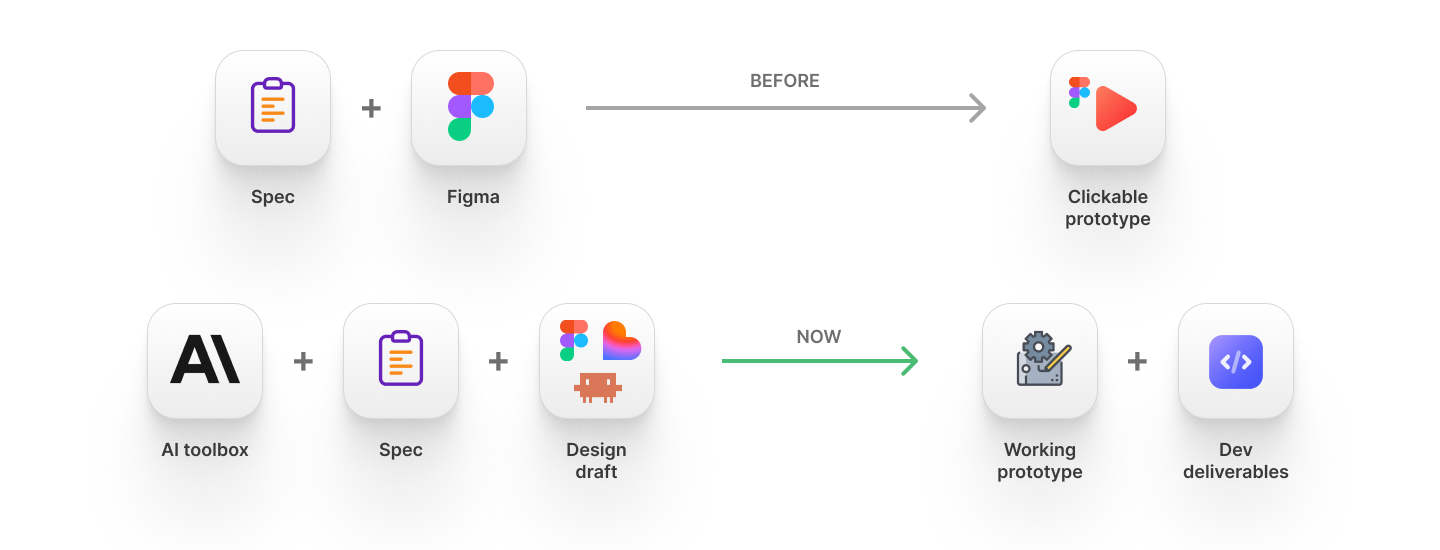
The development process was a genuine experiment in AI-assisted building. I used Lovable as the primary build environment feeding it structured prompts to generate the React frontend. Claude Code helped me with the parts that required more precision: the PDF export logic, the Supabase schema, and interface interactions.
This wasn’t vibe-coding. It required knowing exactly what I wanted, being able to evaluate what was generated, and iterating quickly when it was wrong. The ratio of good output to rework was directly proportional to the quality of the spec going in.
What I learned & Why This Case Study Matters
AI coding tools are genuinely transformative for a designer who can write precise specs and read code well enough to catch errors. The bottleneck shifted from “can I build this?” to “can I describe this precisely enough?” which is a problem designers are well-equipped to solve.
Most product designers produce deliverables: wireframes, prototypes, specs. Workshopper is different: it’s a product I took from a felt problem to a working beta, alone, using AI tools in less than half a day.
It demonstrates product thinking (problem framing, MVP scoping, instrumented fake door testing), design execution (97-module content architecture, UX from wizard to export), and the ability to build, not just design, with modern AI-assisted development tools.
For teams building AI-native products: this is what that capability looks like in practice.